


Intestinal parasites are worms that parasitize the human intestine by feeding on its contents or sucking blood from the intestinal wall.
In humans, they can cause serious, life-threatening illnesses.They occur mostly in children living in tropical and subtropical regions of rural Africa, the Middle East, South Asia, Indonesia, and Central and South America.
In people from the Mediterranean regions of Europe and southern North America, they are relatively rare.
The size of an adult individual can reach from 1 millimeter to several meters.They invade the walls of human intestines and begin to suck blood from them or live there freely, using nutrients.

The result of the vital activity of such parasites is inflammation of the small or large intestines, ulcers, anemia and vitamin deficiency (mainly A, C, B12).In more severe cases, intestinal obstruction may occur and then you should contact a surgeon for help.
Larvae can also move to other organs (liver, spleen, bladder, muscles, lungs, brain), where they form cysts and cause allergic inflammation.
An infestation is the infection of humans, animals or plants by any type of parasite (including worms).
Symptoms of infection
Intestinal parasites can live in a person's intestines for many years without causing any symptoms.
Common symptoms and signs may appear several weeks or months after infection and include paleness, weakness, frequent fatigue (from anemia due to blood loss absorbed by the worms), sleep disturbances, and weight loss.
Abdominal symptoms can last from several weeks to several months and include:
- bloating.
- Bad breath.
- Loss of appetite.
- Vomiting.
- Itching in the anal area.
- diarrhea
- Blood in the stool.
- The presence of worms or their particles in the feces.
- Itching and skin rash.
- Swelling around the eyes.
Sources of infection
Eggs of intestinal parasites fall into the external environment together with infected feces of humans or animals.Outside the human body, the eggs take several days or weeks to develop into cysts or immature worms (larvae), which can enter the human body through dirty hands or when you eat raw, unwashed vegetables.
Another source of infection is the consumption of undercooked meat from domestic pigs, fish or wild animals (boar, deer, etc.).
You can also become infected through fleas that are carried by pets.
Certain types of intestinal parasites can penetrate the skin while swimming or walking barefoot;when they reach the small or large intestine, they begin to develop into adults.

Types of intestinal parasites
Roundworms (nematodes)
Human roundwormfound all over the world.It reaches 16 cm in length and is as thick as a pencil.
Nematodes are found mainly in tropical areas.Once in the intestine, they begin to suck blood from the intestinal wall.
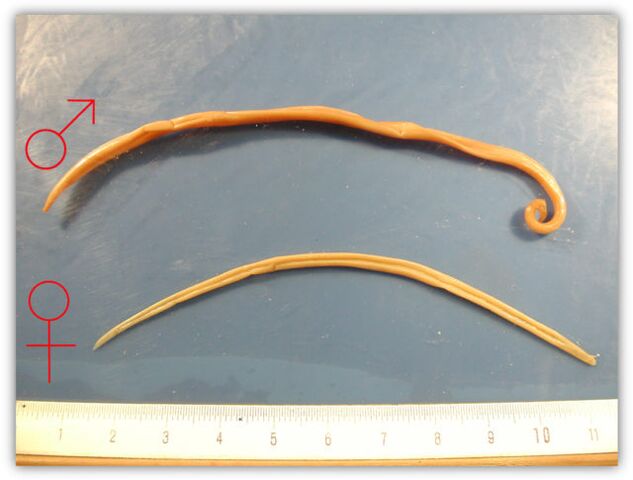
sedges.A white worm, reaching no more than half a centimeter in length.At night, they can come to the surface from the anus and lay eggs in its area, which causes severe itching.
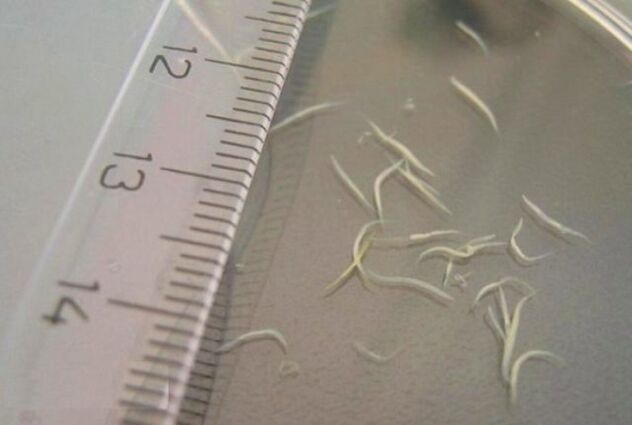
Trichinella.They cause trichinellosis;you can become infected by eating poorly processed, contaminated meat.
They can travel from the intestines to the muscles and other organs, where they form cysts, encapsulated forms that are difficult to get rid of.The main symptoms are pain in the abdomen, muscles, joints, swelling of the eyes and rash on the skin.

trematodes
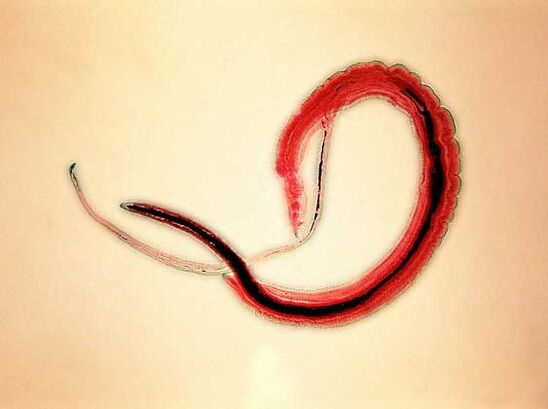
Blood flukescause intestinal schistosomiasis.They are found mainly in Africa, the Middle East, the Caribbean and South America.They are no more than 25 mm long and about 1 mm thick.Blood fluke eggs can be found in feces and urine.
Cestodes
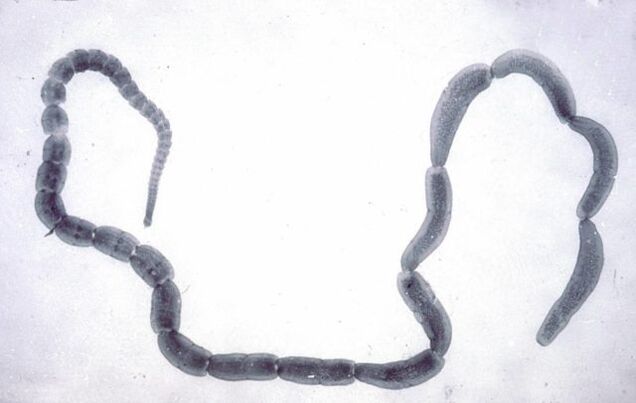
Broad tapewormenters the human body through consumption of contaminated fish.The parasite can reach 10 m in length.It is widespread in Europe and the USA.
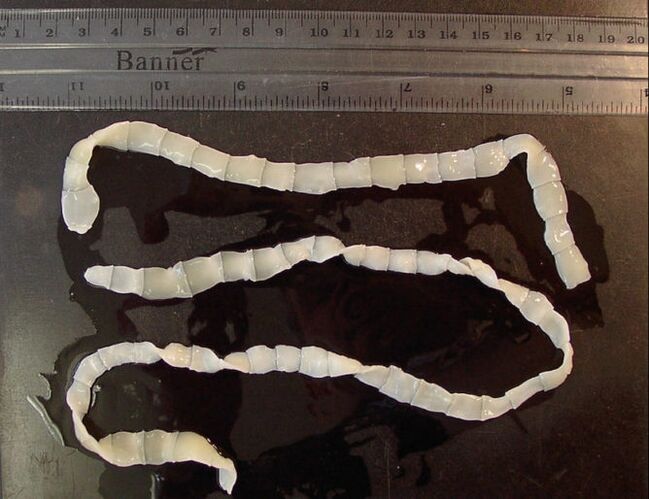
Beef and pork tapeworm.You can become infected by eating bad beef or pork.
The parasite is distributed worldwide and people living in rural areas are particularly susceptible to infection.Adult worms can reach a length of over 20 m.
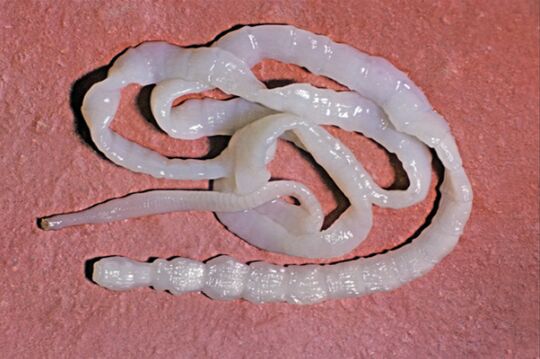
Cucumber tapeworm.It is common in domestic dogs and cats.Humans are rarely infected with this intestinal parasite due to the fact that the main source of spread of cucumber tapeworm eggs is fleas.
Diagnosis and prevention
If you suffer from unexplained bloating, diarrhea, weakness, or weight loss, your doctor should first suspect intestinal parasites as a possible cause.To confirm this, you need to donate blood and feces for analysis.
For prevention, it is enough to follow the following recommendations:
- Wash your hands regularly after using the toilet, handling your fingers, and after handling pets.
- Do not walk barefoot or swim in standing shallow bodies of water.
- Thermally process meat products.
- Get regular medical checkups.